
Buying Alpaca in Peru: A Guide to Market Finds
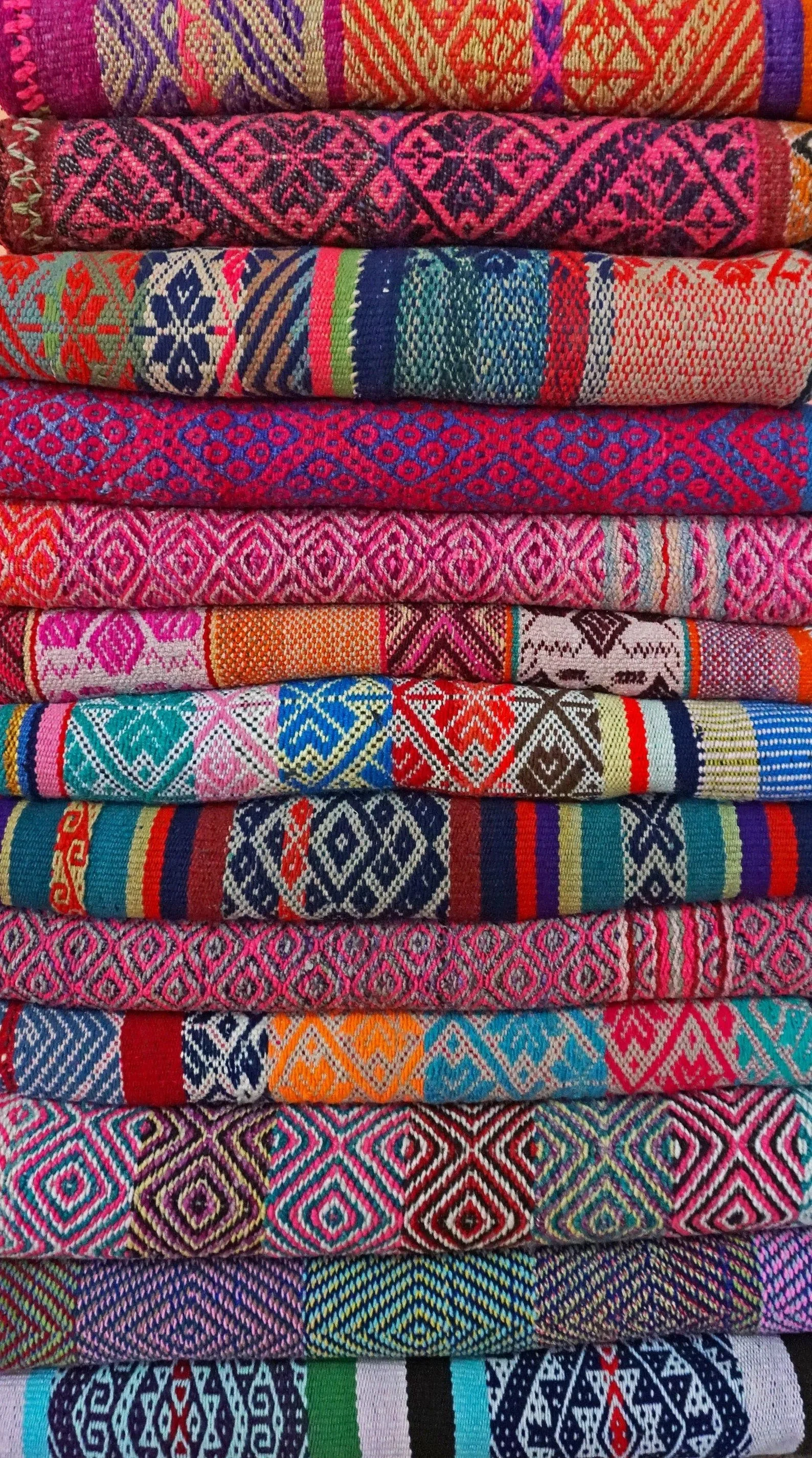
You can wear Alpaca sweaters on the plane, so it’s easy to justify the purchase. Ten blankets in and you’re checking a second bag because you just have to get presents for your entire extended family.
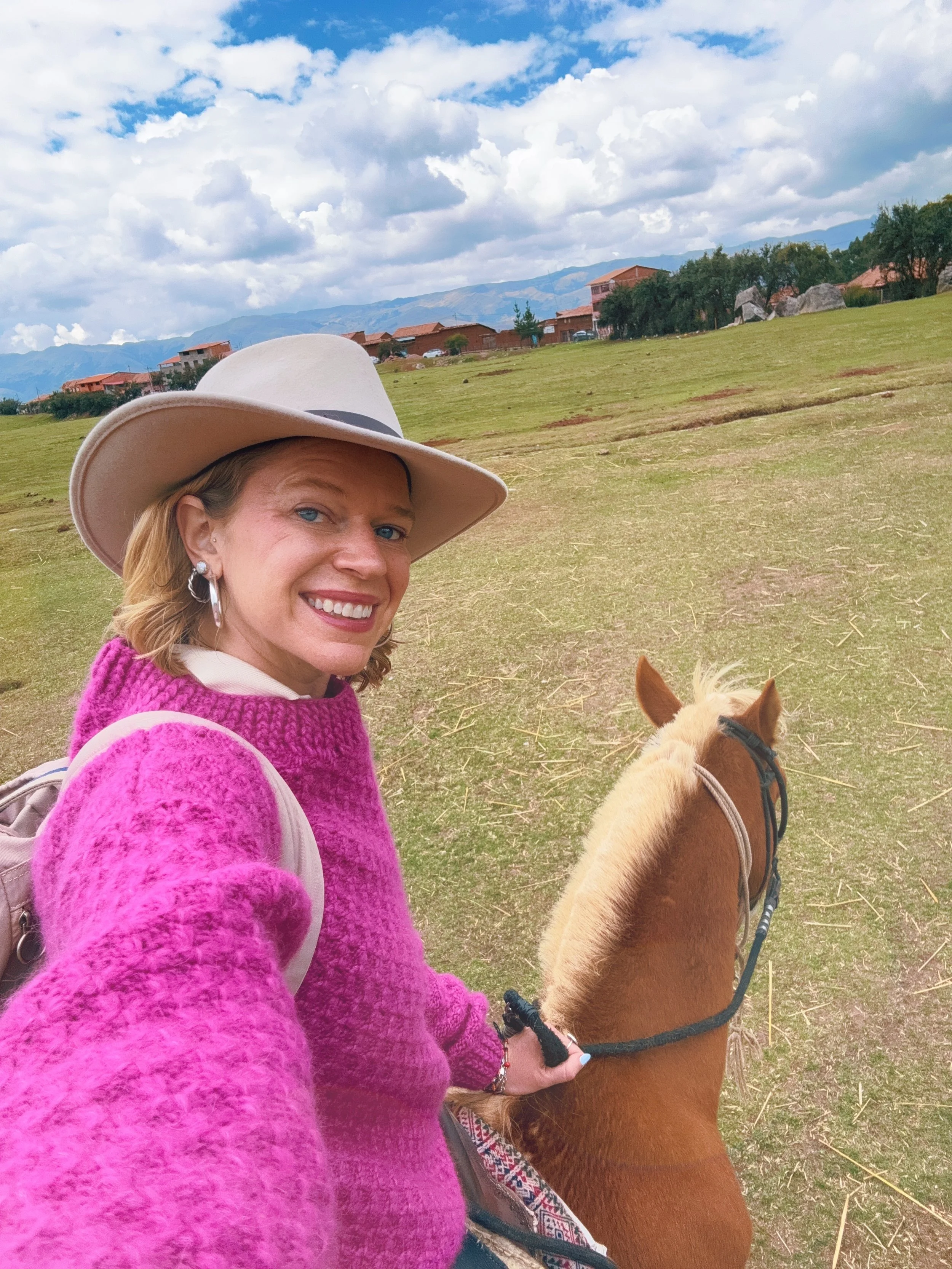
Hannah wearing one of her favorite alpaca sweaters from Cusco on the Elsewhere Sacred Valley Retreat horseback riding excursion
Shopping for textiles is one of our favorite things to do in Peru. Take your time. There are pieces you’ll buy because you need something warm, and others you’ll bring home because of the person you met or the story woven into them.
It helps to know which you’re looking for.
How do you tell if it’s real alpaca?
Start by handling it, then ask directly about the fiber. A market piece may have a label, or it may not. And a label that says “100% alpaca” may or may not be telling the truth.
Touch, smell, and the appearance of the fibers can give you reasons to ask more questions, but none proves that a garment is pure alpaca. Your best approach is to look closely, have a proper conversation, and walk away if you’re not comfortable with the answers.
Put it against your skin. Try the inside of your wrist or your neck. Notice whether it feels smooth, comfortable, and initially cool. Compare a few pieces rather than relying on your memory of a sweater at home. Fine alpaca can feel beautifully soft; coarser alpaca can still itch. Check out a luxury store where the alpaca content is guaranteed first, and use what you felt there as a guide in the markets.
Take it into the daylight. Look for a gentle, silky sheen. Examine the lengths of fiber visible above the yarn, without pulling them out. Turn the piece over and check for roughness. Synthetics are treated on the outside, with a telltale roughness at the interior.
Hold it. Smell it. Compare the weight and drape of similarly sized pieces. Check for strong perfume or mustiness, which you certainly don’t want. Folk wisdom will tell you that natural fibers will have a hay-like scent. Alpaca purists will tell you it has a neutral scent, with a faint smell of the Andean highlands. Both are okay in our books.
A cool touch, sheen, or lack of shedding doesn’t guarantee pure alpaca. Nor does a smell or a few loose fibers prove it’s synthetic. Use what you notice to start the conversation.
Then ask. Is it entirely alpaca? Does it contain sheep’s wool? Acrylic? What are the percentages? “Alpaca” on its own isn’t a complete answer.
Ask again, if you need to.
You don’t need to make this an interrogation. Be friendly and specific. Plenty of sellers will explain what they have when you make clear what you’re looking for.
¿Es cien por ciento alpaca?
Is it 100% alpaca?¿Tiene lana de oveja o acrílico?
Does it contain sheep’s wool or acrylic?¿Qué porcentaje de alpaca tiene?
What percentage is alpaca?¿Quién lo hizo?
Who made it?
If the first answer is simply “baby alpaca,” ask whether that means the whole piece or part of a blend. You’re allowed to keep asking until the answer satisfies you one way or the other.
For an expensive purchase, ask for details. If the explanation keeps changing, or you still doubt the garment, thank them and leave it behind. There will be another sweater.
What does “baby alpaca” mean?
Baby alpaca is a fine grade of fiber, not necessarily fiber from a baby animal.
It’s also separate from the question of purity. A garment can contain baby alpaca mixed with other fibers. Ask about the whole composition before deciding the price is right.
And don’t dismiss sheep’s wool. A beautifully made wool textile can be an excellent purchase. We just prefer to know that’s what we’re buying.
Sometimes, the story is what you’re after.
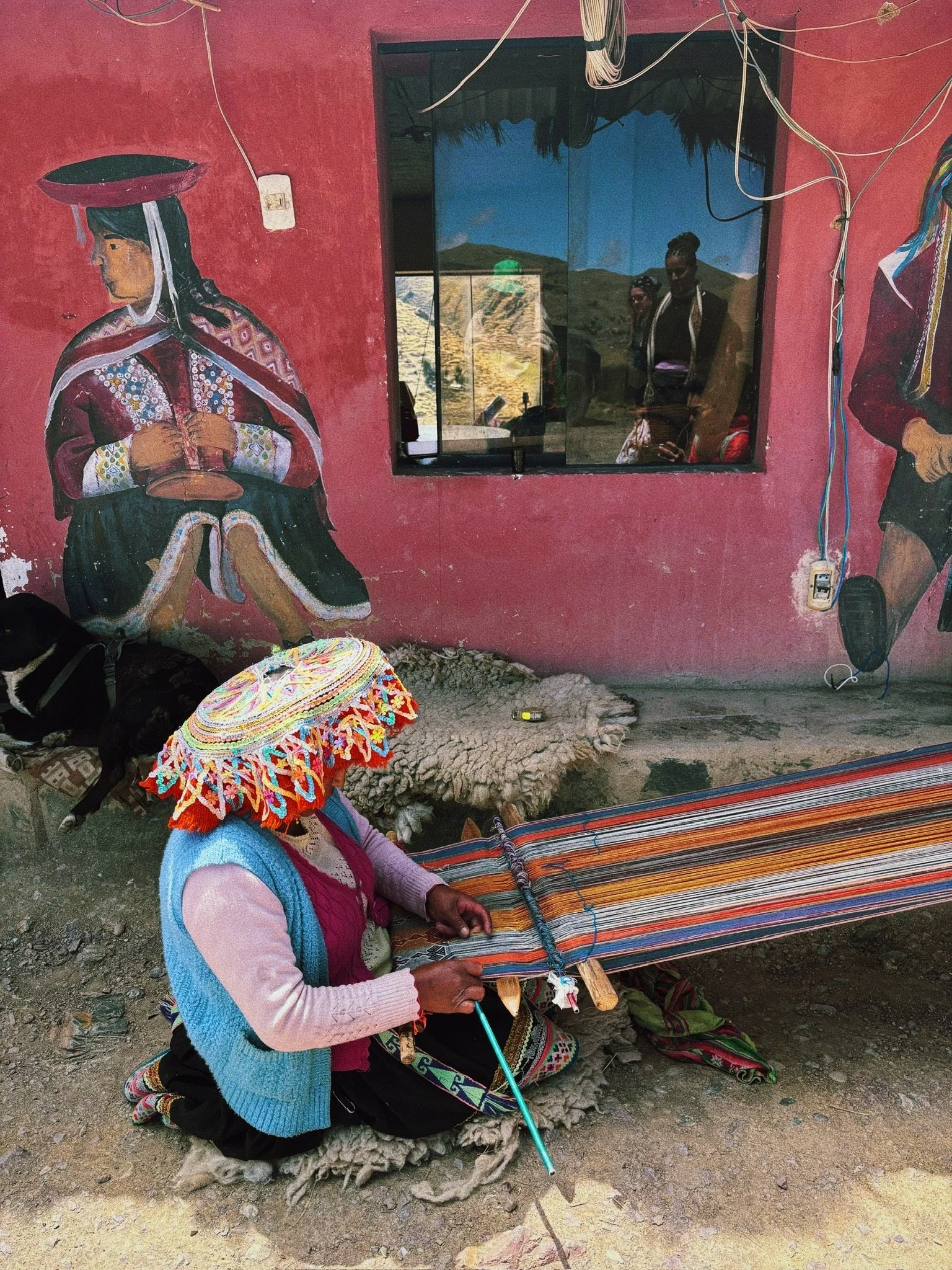
Weaver using the traditional Andean backstrap loom method at an off-the-beaten-path market we visit during the Sacred Valley Retreat
A textile found in a small, far-flung community may be made with sheep’s wool, alpaca, synthetic yarn, or a mixture. Being off the usual tourist route doesn’t guarantee pure alpaca. Nor does the presence of synthetic yarn automatically make the work meaningless.
If you’re buying traditional handicraft, take an interest in the design. Ask your guide or translator to help you find out what the figures, patterns, and colors represent. Who made it? Is the design particular to their community or family? Does it tell a story?
Let the maker or seller explain. Meanings can vary, and some choices may simply be decorative, or have special significance to the weaver. There isn’t one universal key to every Andean textile.
You might arrive looking for a scarf and leave with something entirely different because you’ve spent half an hour learning about it.
Sweaters, scarves, and blankets: what to check
Sweaters: Try them on. Check the neckline, cuffs, underarms, and seams. Look for holes or loose seams. A beautiful color won’t make an uncomfortable neckline more tolerable once you’re home.
Scarves: Put one around your neck and leave it there for a minute. Check the length. Can you wrap it the way you like? Does it feel good against bare skin?
Blankets: Unfold the whole thing. Look at the edges and check the dimensions. Ask whether it’s a bed blanket or a throw. It’s surprisingly easy to furnish an imaginary house while shopping on holiday.
For all three, ask how to wash them. Get that answer before you pack them away.
What should you pay for alpaca in Peru?
Compare similar pieces. Fiber content, size, construction, and the work involved all affect the price. There’s no magic amount that proves something is genuine, and an expensive label doesn’t settle the question either.
If you specifically want 100% alpaca and can’t get a clear answer at a stall, try an established maker or retailer that can explain its sourcing. You can enjoy market shopping without making every purchase there.
Our approach to haggling is simple: we don’t. If the price seems fair and you can afford it, pay what’s asked. If you can’t, leave it behind graciously. Admiring something is free.
Come meet the women behind the weaving.
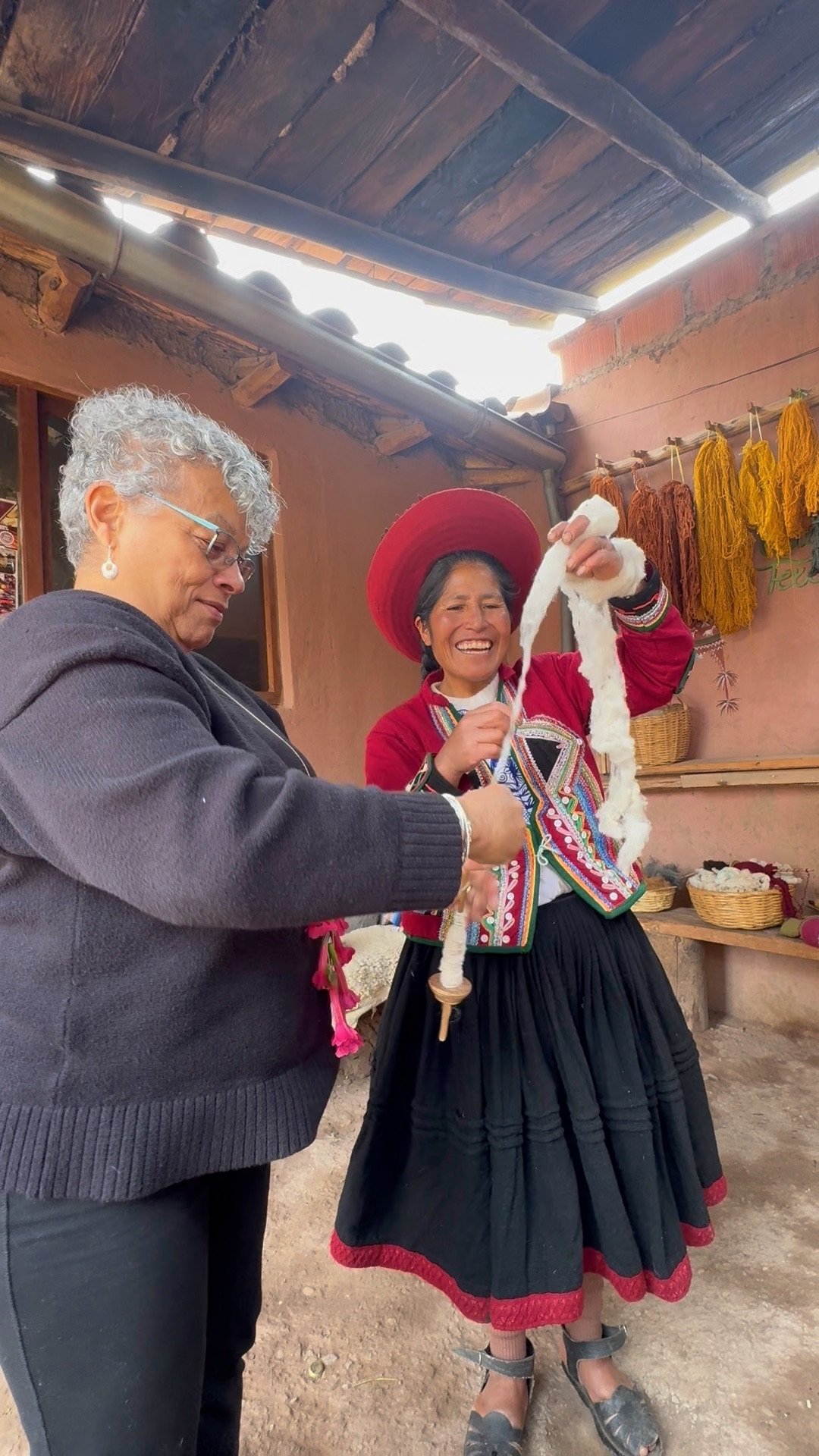
Learning to spin wool yarn with our fabulous instructors at the women weaver’s collective
On our February retreat, you can join an optional visit to a women-led weaving collective near Lake Piuray.
Learn about the symbolism, natural dyes, and process directly from women working to uphold their community’s longstanding textile traditions. This is your chance to ask what the designs mean and see how the work comes together.
Come to Peru with Elsewhere.
We’re Hannah and Cassie, the founders of Elsewhere Retreats. From February 21–27, 2027, we’re bringing a small group to Peru’s Sacred Valley for seven days of yoga, hiking, swimming, and exploring a place Hannah called home for three years.
We’ll have a beautiful property and private spa entirely to ourselves, with Chef Pío cooking dinner and Cassie teaching optional yoga twice a day. Machu Picchu and our guided hike to ancient ruins and sacred springs are included. Leave a little room in your suitcase.